

Subcontractor Insurance
Your own policy, in your own name.
High Risk Cover arranges subcontractor insurance for subbies on high risk sites across Australia, so your cover matches your subcontract before day one.
- Subcontractors, sole traders and small crews working under a head contractor, the builder running the job, and the businesses that engage them.
- Public liability for damage your work causes, workers comp for anyone you employ, and cover for your tools and machines.
- We read the insurance clause in your subcontract and set your policy up to match it before you start.
Monday to Friday, 8.30am to 5pm. Australia-wide, from Wembley WA.
What Is Subcontractor Insurance?
The cover the head contractor checks first.
Subcontractor insurance is the cover a subbie holds in their own name to work under someone else's contract. It is usually public liability, which pays when your work injures someone or damages property, plus workers compensation if you employ staff. The head contractor sets the limits and checks your proof of cover before you start.
- Hold cover in your own name, not under the head contractor's policy.
- Set your limit by the work you do and the subcontract.
- Have your certificate of currency, the insurer's proof of cover, ready before day one.
Who Answers For What On A Subcontracted Job?
The terms get passed down to you.
Insurance terms start at the top of the job and get passed down. The head contract, the main agreement between the client and the builder, sets them, and your subcontract copies them on to you.
The Principal
The client who owns the project and writes the insurance terms into the head contract.
Head Contractor
Signs the head contract, runs the site and passes its terms down to every subbie.
You, The Subbie
Do the work, hold your own cover and answer for what your work causes.
What Can Go Wrong On Your Job, And The Cover That Pays
Sparks from your grinder set fire to stored materials owned by another trade
Public LiabilityYour apprentice cuts their hand badly on the job
Workers CompensationYour hired scissor lift tips when the ground gives way under it
Plant & EquipmentThe head contractor's insurer pays a claim from your work, then comes after you for the money
Public LiabilityA design or measurement you supplied turns out wrong and costs the head contractor money
Professional Indemnity
Starting a subcontract soon?
Call 1300 477 662Insurance For Subcontractors
What the builder asks you to show.
These are the covers a head contractor usually asks a subbie to show. Which ones you need depends on your trade, whether you employ anyone and what your subcontract says.
Public Liability
Pays when your work hurts someone or damages property that is not yours, like the building you work in or a car parked underneath. Nearly every subcontract names it, with a minimum limit, the most the policy will pay on one claim.
More on public liabilityWorkers Compensation
Compulsory in nearly every case once you employ anyone, apprentices and casuals included. If you trade through a company and work on the tools, some head contracts ask for you to be covered as a working director. Whether that is possible depends on your state.
More on workers compensationPlant & Equipment
Covers the tools and machines you own, lease or hire, on site, in storage or on the back of the ute between jobs.
More on plant & equipmentProfessional Indemnity
For subbies who design, measure up or give technical advice as part of the job. It pays when a head contractor says your advice was wrong and it cost them money.
More on professional indemnityAlso available
- General Property
- Contract Works
- Commercial Vehicle
- Management Liability
What The Head Contractor Checks On Your Certificate
Six lines to get right before you start.
A certificate of currency is a one-page document from your insurer showing your policy is in force. The head contractor reads these lines on it before you start.
Dates
The policy is in force on the day you start
Occupation
The trade on your policy matches the work you do
Limit
At least the figure your subcontract names
Noted
The head contractor is recorded on your policy as an interested party
Indemnity
Principal's indemnity: your cover extends to the builder who hired you
Waiver
Waiver of subrogation: your insurer agrees not to chase that business for its payout
We set these lines up with you before your start date.
Starting a subcontract soon?
Call 1300 477 662How We Help Subbies Get On Site
We read your subcontract before you start.
We Read Your Subcontract First
Send us the insurance clause and we set your limits and extras to match what it asks for.
We Get Your Occupation Right
Insurers price your policy and judge claims on the occupation listed, so we make sure it covers every task you do on site.
We Handle The Paperwork
Our support team handles about 80% of the paperwork and process steps, so you can stay on the tools.
We Stay With You On Claims
If something goes wrong on a job, a broker stays on your side from the first phone call to the end of the claim.
Who Needs Subcontractor Insurance?
Sole traders, small crews and subbies with subbies.
Anyone working under someone else's contract on a high risk site. That includes sole traders on an ABN, their Australian Business Number, and small crews.
Subcontractors we insure
- Sole traders working on an ABN
- One-person companies on the tools
- Small crews and family businesses
- Subbies who engage their own subbies
Where you work
- Construction and civil works
- Scaffolding
- Mine sites
- Industrial plant maintenance
- Security at sites and events
- Transport and haulage
What Sets The Price Of Subcontractor Insurance
Your trade, your limit and any hot work.
The premium, the yearly cost of your policy, comes from what you tell the insurer about your work. These are the details they ask for.
Your Trade
The occupation on your policy sets the starting point, so describe the work you really do on site.
The Limit Your Subcontract Sets
A higher limit usually costs more, and your subcontract decides the limit you need.
Turnover And Wages
Your yearly turnover and the wages you pay show the insurer how much work you do.
Height And Hot Work
Working at height, or with welders and grinders that throw sparks, needs to be declared up front.
Who You Engage
If you bring in your own subbies, the insurer wants to know whether they carry their own cover.

Talk To Paul About Your Subcontract
Bring it in before you sign.
Bring your subcontract to us before you sign it. Paul or another broker will check your cover against its insurance clause and tell you what is missing.
What Can Happen On A Subcontracted Job
Sparks, a sore back and an uninsured labourer.
Examples of what can go wrong for a subbie, and the cover that answers each one.
A Fire In The Ceiling
What can happen
Hot work, meaning welding or grinding that throws sparks, sets insulation alight, and the finished rooms underneath are ruined by smoke and water.
What pays
Public liability can pay for the damage, as long as your policy lists the hot work you do.
Your Labourer Hurts Their Back
What can happen
A labourer you employ is injured carrying formwork, the timber moulds concrete is poured into, up a stairwell.
What pays
Your own workers compensation pays their wages and treatment, because you are their employer.
Your Own Subbie Has No Cover
What can happen
A labourer you brought in on an ABN damages the client's goods lift, and has no public liability of their own.
What pays
The claim comes back to your public liability, so check your own subbies' certificates before they start.
Subcontractor Quote
Tell us the limit your head contractor wants.
Tell us your trade and what your subcontract asks for, and a broker will call you back.
Subcontractor Insurance Questions
Whose policy, what limit, and your tools.
Can I work under the head contractor's insurance instead of my own?
Usually not. Most head contracts require every subbie to hold their own public liability, and the head contractor's policy may not cover your work at all. Ask for the insurance clause before you quote the job.
How much public liability does a subcontractor need?
Your subcontract sets it. Many sites and councils ask for $10 million or $20 million, and the right limit depends on the work you were engaged for. Paul explains how head contractors set fair limits in our guide on whether subcontractors need their own insurance.
Do I need workers compensation if I work on my own?
You may not need a policy for yourself, but some states can treat a contractor as the head contractor's worker. Once you hire anyone, even one casual, you will almost certainly need it, because only a few states exempt very small employers. See how workers compensation works in each state.
What are principal's indemnity and waiver of subrogation?
Principal's indemnity extends your policy to cover the business that engaged you, and a waiver of subrogation stops your insurer chasing them for its payout. Subrogation is an insurer's right to recover what it paid from whoever caused the loss. Paul covers both in our guide for head contractors.
Does subcontractor insurance cover my tools?
Public liability does not, because it is for other people's property. Your own tools and machines need plant and equipment insurance, or general property cover for smaller items.
I am a subbie who also engages subbies. What do I need?
Your own cover, plus a check that each of your subbies holds theirs before they start. Pass on the same insurance terms your head contractor gave you, scaled to their part of the job. Our guide on whether subcontractors need their own insurance explains how to keep their limits fair to the work.
How We Set Up Your Cover
Your trade and start date, then the paperwork.
Initial Consultation
We talk through your business, your workers and your sites.
Risk Assessment
We work out where your real exposure sits.
Custom Policy Design
We build the cover around your work and your contracts.
Quote & Proposal
We bring you the options from national insurers.
Policy Implementation
We put the cover in place and send your paperwork.
Ongoing Support
We help with claims, renewals and changes as you grow.
Insurance For High Risk Trades
Subbing for scaffolders, agencies or security firms.

Labour Hire
Your workers are placed in your clients' businesses, but you are still their employer. We cover injuries, damage to client property and claims of negligent placement.
Labour hire insurance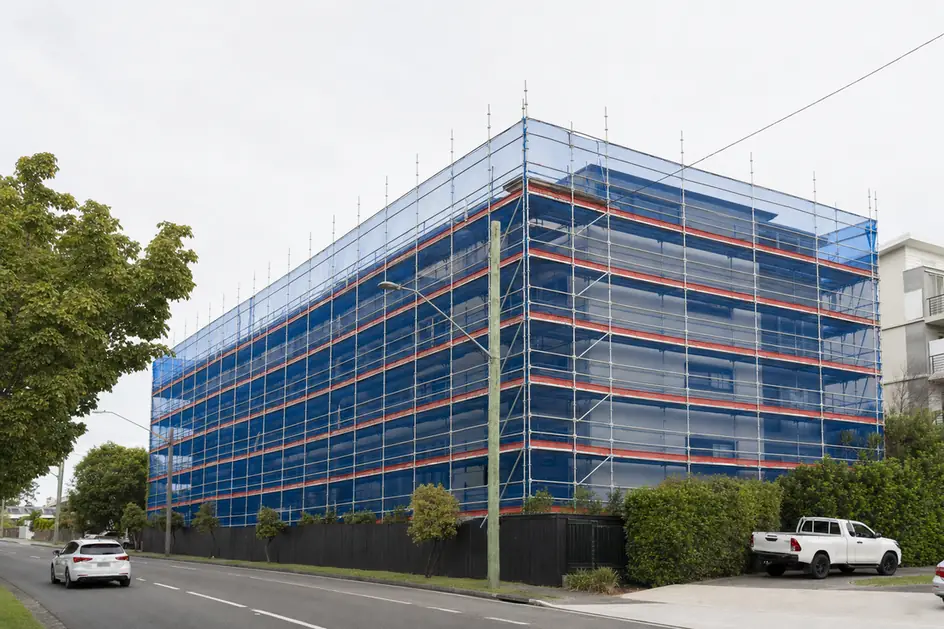
Scaffolding
Working at height, heavy gear and public areas. Commercial, residential, industrial, mine and marine, and event scaffolding.
Scaffolding insurance
Security
Static guards, mobile patrols, crowd control, K9 units and armed security. Assault, misconduct and wrongful detention claims.
Security insurance
Get On Site Covered
Your certificate ready before your start date.
Ring a broker with your trade and your start date, and we will set your cover up before you walk on site.
1300 477 662